
.png)
Deadly 7.7-Magnitude Earthquake Strikes Flores as Thousands Await Aid

A powerful 7.7-magnitude earthquake struck Indonesia's Flores region early Saturday, August 15, leaving widespread destruction and a growing humanitarian emergency across parts of East Nusa Tenggara.
As rescue operations continue, the death toll has risen to at least 53 people, with more than 130 others injured, according to reports on Sunday. Around 5,000 residents have been displaced, many of whom are staying in temporary shelters or outdoors because they fear returning to damaged homes.
The earthquake struck off Flores and caused severe damage across several areas, including Manggarai, East Manggarai and Nagekeo. Hundreds of buildings have been damaged, while reports indicate that more than 900 homes were affected in East Nusa Tenggara alone. Roads and other critical infrastructure have also been disrupted by landslides and debris, making access to some communities difficult for emergency teams.
Thousands Need Emergency Assistance
For many survivors, the immediate challenge is finding safe shelter and basic necessities.
Displaced residents have been seeking emergency supplies including clean water, food, medicine, blankets, tents and other essential items. Temporary shelters have been established in several locations, including public facilities where residents can stay while authorities assess damaged buildings.
The situation has been made more difficult by continuing aftershocks. Nearly 1,000 aftershocks were reported following the main earthquake, increasing anxiety among residents and complicating rescue and recovery operations.
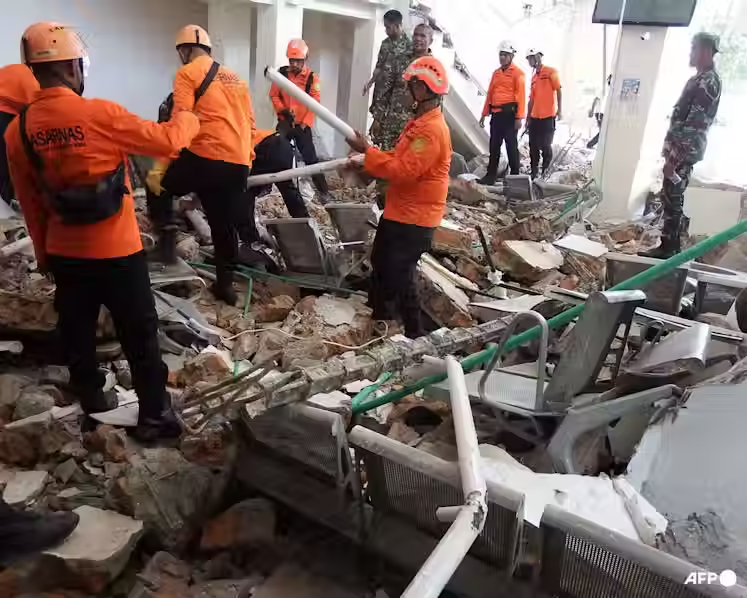
Rescue Operations Continue
Search-and-rescue teams are working to reach the hardest-hit areas and assess the scale of the destruction.
More than 3,500 military and police personnel have been deployed as authorities work to clear roads, assist evacuations, provide medical support and distribute emergency supplies. Some locations remain difficult to reach because of landslides and blocked transportation routes.
Rescue teams are also continuing to search damaged buildings and rubble for survivors.
The emergency response is particularly challenging because the disaster has affected multiple communities across a geographically difficult island region.
Tsunami Warning Was Lifted
A tsunami warning was issued following the earthquake but was later lifted.
Reports indicated that waves of up to around 1.5 metres were recorded in some areas. Authorities have continued urging residents to remain alert because strong aftershocks have followed the main earthquake. The combination of the initial earthquake, aftershocks, landslides and infrastructure damage has created a complicated emergency situation.
Indonesia is located along the Pacific Ring of Fire, one of the world's most seismically active regions.
Earthquakes are a recurring natural hazard across the country, and Flores has experienced devastating seismic events in the past.
The latest disaster is being described as one of Indonesia's deadliest earthquakes in recent years, highlighting the continuing vulnerability of communities living in earthquake-prone areas.
The disaster also raises broader questions about building resilience, emergency preparedness and the ability to quickly deliver assistance to communities located across remote islands.
While the immediate priority remains saving lives and providing emergency assistance, recovery will likely take much longer. Families who have lost homes will need temporary accommodation and eventually permanent housing. Damaged schools, health facilities, roads and other public infrastructure will also require assessment and reconstruction. For local businesses, the impact could extend beyond physical damage. Disrupted transportation, reduced access to communities and interruptions to electricity or communications can make it difficult for businesses to reopen and for people to return to normal economic activity.
The recovery effort will therefore involve more than rebuilding houses. It will require restoring communities, infrastructure, livelihoods and essential services.
Behind every casualty figure is a family, a home and a community affected by the disaster.
Thousands of people who were forced to leave their homes are now facing uncertainty while waiting for assistance and assessing what remains of their properties.
For residents in the hardest-hit areas, the priority is simple: safety, shelter, food, clean water and medical care.
As emergency workers continue their efforts, the focus remains on reaching isolated communities and making sure assistance reaches those who need it most.
The Flores earthquake is a stark reminder of Indonesia's vulnerability to major natural disasters.
The immediate focus is on search and rescue, medical assistance, emergency shelter and essential supplies. But once the emergency phase ends, the country will face the much larger task of rebuilding affected communities and strengthening resilience against future disasters.
With thousands displaced and rescue operations still underway, the situation remains active and the numbers may change as authorities continue assessing the damage.
For Flores, the priority now is clear: save lives, reach those in need and help communities begin the long road to recovery.


Comments