
.png)
Red Sea Tensions Put Global Shipping, Trade and Business Under Pressure

The Red Sea is becoming more than a regional security concern. As fighting and tensions around the waterway continue to change the operating environment for commercial vessels, businesses around the world are watching closely for potential impacts on shipping, supply chains and international trade. The Red Sea is strategically important because it connects the Mediterranean region with the Indian Ocean through the Suez Canal. For companies moving goods between Asia, Europe and other major markets, the route can significantly influence transportation times and costs.
A Critical Route for Global Trade
The Red Sea sits along one of the world's most important maritime corridors. Ships traveling between Asia and Europe can use the Suez Canal and Red Sea route rather than taking the much longer journey around Africa. When security risks increase, however, shipping companies may reconsider whether the route is commercially viable. Some operators can choose to reroute vessels around the Cape of Good Hope, but that alternative adds distance, fuel consumption and sailing time. For businesses, these changes can create a chain reaction. Higher transportation costs can eventually affect importers, exporters, manufacturers, retailers and consumers.
Supply Chains Face Additional Pressure
Modern supply chains are highly interconnected. A disruption at a major shipping route can have consequences far away from the location where the disruption occurs. Companies depending on imported components, raw materials or finished products may face longer delivery schedules if vessels are diverted. Businesses may also need to hold additional inventory to protect against delays. For industries operating with tightly managed inventories, even relatively small changes in shipping schedules can create operational challenges.
Shipping Costs Could Become a Business Concern
Rerouting vessels around Africa generally requires additional fuel and time. Shipping companies may also face higher insurance and security-related expenses when operating near areas affected by conflict. Those costs can influence freight rates and ultimately increase the expense of moving products internationally. The impact will not necessarily be the same for every company. Large businesses with diversified suppliers and flexible logistics networks may be better positioned to absorb disruptions, while smaller companies can be more exposed to sudden increases in transportation expenses.
Europe and Asia Are Closely Connected to the Story
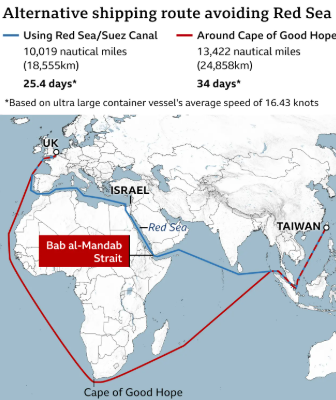
The Red Sea is particularly significant for trade between Asia and Europe. Manufacturers and exporters in Asian economies rely heavily on maritime transportation to reach European customers. For Asian businesses, disruptions could mean longer routes, changing freight costs and more complicated logistics planning. European companies may also face increased costs when importing products from Asia, particularly in sectors that depend heavily on international supply chains.
The Bigger Economic Picture
The Red Sea situation highlights how geopolitical developments can quickly become business issues. A conflict or security crisis in one region can influence shipping decisions, commodity markets, insurance costs and supply-chain strategies around the world. It also reinforces a trend that businesses have increasingly recognized in recent years: global supply chains need resilience, not just efficiency. Companies are therefore paying greater attention to alternative suppliers, inventory levels, transportation routes and contingency planning.
What Businesses Should Watch
The Red Sea will remain an important story for global businesses as long as security conditions continue to affect commercial shipping. Companies should monitor several factors, including:
Shipping route changes and vessel diversions
Freight and insurance costs
Delivery times between Asia and Europe
Availability of key materials and components
Energy and commodity prices
Changes in maritime security conditions
Potential effects on consumer prices
The longer disruptions continue, the greater the possibility that businesses will need to make more permanent adjustments to their logistics strategies.
A Global Business Issue, Not Just a Regional Crisis
The importance of the Red Sea goes far beyond the Middle East. Its position within the global shipping network means developments there can influence businesses, manufacturers and consumers thousands of kilometers away. For companies already dealing with geopolitical uncertainty, inflation and supply-chain challenges, renewed pressure on a major maritime route represents another risk to manage. The Red Sea is therefore becoming a bigger global business story because what happens along the shipping route can affect how goods move, how much they cost and how businesses plan for the future.


Comments