
.png)
Famous Handicrafts from Honolulu That Showcase Hawaii’s Rich Culture

When people think of Honolulu, images of Waikīkī Beach, Diamond Head and beautiful Pacific sunsets often come to mind. But beyond its famous scenery, Honolulu is also a place where Hawaiian craftsmanship and cultural traditions continue to thrive.
From carefully woven Lauhala to colourful flower Lei, traditional handicrafts provide a glimpse into Hawaii’s history and the knowledge passed down through generations.
Many of these crafts are not exclusive to Honolulu and have roots throughout the Hawaiian Islands. However, Oʻahu’s capital is an important place to encounter them, whether through local artisans, cultural workshops, museums or specialty shops.
Here are five famous handicrafts from Honolulu and Hawaii worth knowing about.
1. Lauhala Weaving

Lauhala weaving is one of Hawaii’s best-known traditional crafts.
The word Lauhala refers to the leaves of the hala tree, or pandanus. Once dried and prepared, the leaves can be woven by hand into a wide range of useful and decorative objects, including hats, baskets, mats, bracelets and other accessories.
Historically, woven materials played an important role in everyday Hawaiian life. Lauhala objects could be used for household items and other practical purposes. The craft has survived through generations of skilled weavers who continue to teach traditional techniques today.
For visitors to Honolulu, a handmade lauhala item can be a meaningful souvenir because it represents far more than a tropical design. It reflects patience, skill and a living tradition.
2. Hawaiian Lei

Few things are more closely associated with Hawaii than the Lei.
Often made from fresh flowers and greenery, lei are traditionally given to express affection, welcome, celebration, honour or connection. On O'ahu, lei-making remains a cherished craft, with artisans creating designs from flowers, leaves, feathers and other materials.
The craft also has an important place in Honolulu's cultural calendar. Lei Day, celebrated on May 1, highlights the artistry and cultural meaning of lei through ceremonies, displays and competitions.
Visitors can find traditional lei throughout Honolulu, including in the historic Chinatown area, where specialist shops continue the practice of making lei by hand.
Rather than simply being a decorative souvenir, a lei carries a message. The materials, colours and style can all contribute to its meaning.
3. Kapa Cloth

Another important Hawaiian craft is Kapa, a traditional textile made from the inner bark of the wauke, or paper mulberry, plant.
Creating Kapa was a labour-intensive process. The bark was prepared and repeatedly beaten with wooden beaters to create thin sheets of material. The finished cloth could then be decorated with patterns and coloured using natural dyes. Kapa was historically used for clothing, bedding and other purposes.
Although modern visitors may encounter Kapa as an art form rather than an everyday textile, the craft provides an important connection to pre-contact Hawaiian life.
Its patterns and production techniques also demonstrate how Hawaiian communities developed sophisticated textile traditions using locally available natural materials.
4. Koa Woodcraft and Carving

Hawaiian woodworking is another craft worth discovering in Honolulu.
Koa, an indigenous Hawaiian hardwood, is particularly prized for its rich colour and distinctive grain. It has long been valued in Hawaii and is used today in products ranging from decorative objects to musical instruments.
Koa is especially famous for its connection to the ʻukulele. Hawaiian instrument makers use koa to create instruments celebrated for their appearance and sound.
Wood carving itself also has deep roots in Hawaiian culture. Traditional Hawaiian artisans worked with wood, bone and stone to create objects with practical, ceremonial and cultural purposes.
For traveller's looking for a distinctive Hawaiian keepsake, a locally made koa object can be a beautiful representation of the islands' natural environment and craftsmanship.
5. Niihau Shell Lei
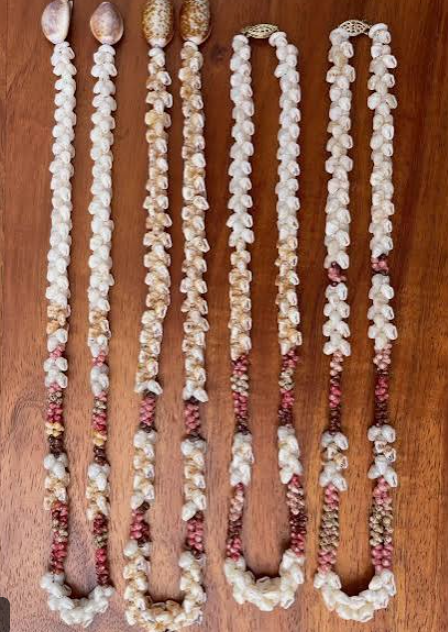
The Niihau shell lei is among the most intricate forms of Hawaiian traditional jewellery.
Unlike the familiar flower lei, Niʻihau shell lei are made from tiny shells traditionally gathered on Niihau, one of Hawaii's northwestern islands. The craft developed into a highly refined art form, with artisans carefully selecting and stringing shells into elaborate necklaces.
The shells can vary in colour and pattern, and traditional lei may require hundreds or even thousands of individual shells. Some intricate pieces can take months or even years to complete.
Niihau shell lei also have a connection to Hawaiian royalty. Historical records show that Queen Kapiʻolani and Queen Emma wore them, helping establish the shell lei as a treasured form of Hawaiian adornment.
Because of their craftsmanship and cultural significance, authentic Niʻihau shell lei are considered fine folk art rather than ordinary tourist jewellery.
Why Hawaiian Handicrafts Matter
The appeal of Hawaiian handicrafts goes beyond their appearance.
Each craft represents knowledge passed from one generation to another. Lauhala weaving demonstrates the relationship between people and natural materials, Kapa preserves an important textile tradition, lei expresses connection and aloha, while woodworking and shell jewellery showcase the skill of individual artisans.
For visitors to Honolulu, exploring local handicrafts can therefore offer a different perspective on Hawaiʻi—one that goes beyond the beaches and resorts.
The best souvenirs are often the ones that tell a story. A handwoven
Lauhala basket, a carefully made lei or a locally crafted koa object can carry a small piece of Hawaii's artistic heritage home with you.
A Cultural Experience Worth Exploring
Honolulu offers traveller's many opportunities to encounter Hawaiian craftsmanship, from cultural demonstrations and workshops to local markets and specialist stores.
Some artisans and organisations also offer hands-on experiences, allowing visitors to learn traditional techniques rather than simply purchasing a finished product.
Whether you're interested in weaving, textiles, jewellery, woodworking or lei-making, these crafts provide an opportunity to appreciate the creativity and cultural knowledge that continue to shape life in Hawaii.
For traveller's exploring Honolulu, discovering its handicrafts is a chance to take home more than a souvenir—it is a way to connect with the stories, traditions and artistry of the islands.



Comments