
.png)
Flores Earthquake Aftermath: Aid Reaches Remote Communities as Recovery Continues

The aftermath of the devastating 7.7-magnitude earthquake that struck Flores, East Nusa Tenggara, on August 15 continues to affect communities across the region. More than a week after the earthquake, authorities are shifting increasingly toward sustained relief and early recovery, while residents continue to deal with damaged homes, disrupted infrastructure and the psychological impact of repeated aftershocks.
The earthquake struck offshore, approximately 30 kilometres northeast of Nagekeo, at a depth of around 15 kilometres. Indonesia's meteorological agency BMKG initially issued a tsunami warning, which was later lifted, while the earthquake generated a large number of aftershocks.
Aid Efforts Continue Across Flores
One of the latest developments is the expansion of humanitarian assistance to communities that are difficult to reach. On August 23, Indonesia's National Disaster Management Agency, BNPB, reported that aid had reached outer islands in Sikka, where geography and damaged infrastructure have made access particularly challenging. Supplies were transported by fast boat to help ensure that residents outside the main island were not left behind. The deliveries have included rice, food packages, drinking water, blankets, tarpaulins, baby supplies, hygiene products, health supplements and medicines.
The operation also included telecommunications equipment and medical support, highlighting an important part of the recovery effort: restoring not only physical supplies but also communication and basic healthcare services.
The earthquake has been followed by significant seismic activity. According to BMKG, 3,394 aftershocks had been recorded by August 20, ranging from magnitude 1.1 to 6.2. The unusually high level of aftershock activity has contributed to continued anxiety among residents, many of whom remain reluctant to return to damaged homes. For families living in temporary shelters, every additional tremor can bring back memories of the original disaster. This makes the recovery process about more than rebuilding walls and roads. Communities also need reassurance, healthcare and psychological support as they adjust to life after the earthquake.
Flores is geographically complex, with mountainous terrain and island communities spread across the region.
That creates major logistical challenges following a disaster. Damaged roads, landslides, disrupted communications and affected infrastructure can make it difficult for emergency teams to reach smaller communities. BNPB's latest operations show that authorities are increasingly using boats and other transportation methods to reach people who cannot easily be accessed by road. For residents in remote areas, basic necessities such as food, clean water, medicine and temporary shelter can become urgent priorities.

Recovery Will Take Time
The scale of the disaster means recovery is unlikely to happen quickly.
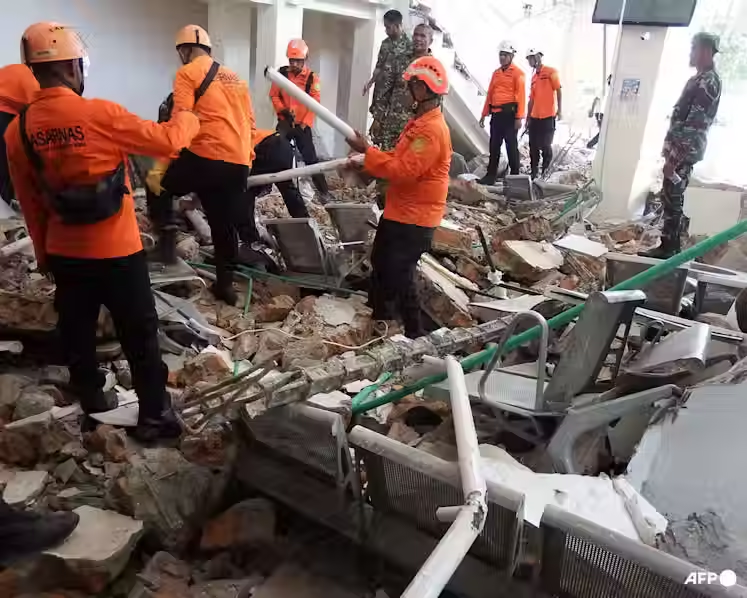
Earlier assessments reported extensive damage to homes and public facilities, while thousands of people were displaced. Businesses and local services have also been affected as communities work to restore normal daily life.
Some local businesses have begun reopening, a positive sign that parts of the economy are starting to recover. However, many families continue to live in temporary shelters while damage assessments and reconstruction efforts move forward.
The focus of the response is gradually changing. In the immediate aftermath, the priority was finding survivors, treating the injured and providing emergency shelter. Now, authorities face the longer task of helping communities rebuild. That includes repairing homes, restoring infrastructure, improving communications and ensuring that schools and healthcare facilities can resume normal operations.
The process will also require careful assessment of which buildings can safely be repaired and which may need to be rebuilt.
The Flores earthquake has left a deep impact on communities across East Nusa Tenggara. For many residents, recovery will not simply mean returning to a repaired house. It will mean rebuilding a sense of security after experiencing one of the strongest earthquakes to hit the region in years. The continued delivery of aid to remote communities is therefore an important part of the response. As Indonesia moves from emergency rescue toward longer-term recovery, the priority remains clear: reaching vulnerable communities, restoring essential services and helping families rebuild safely. For Flores, the earthquake may have happened more than a week ago—but for thousands of people, the recovery is only beginning. #FloresEarthquake2026 _ Trendspire In Asia


Comments