
.png)
New Island Appears After Anak Krakatau Erupts in Indonesia

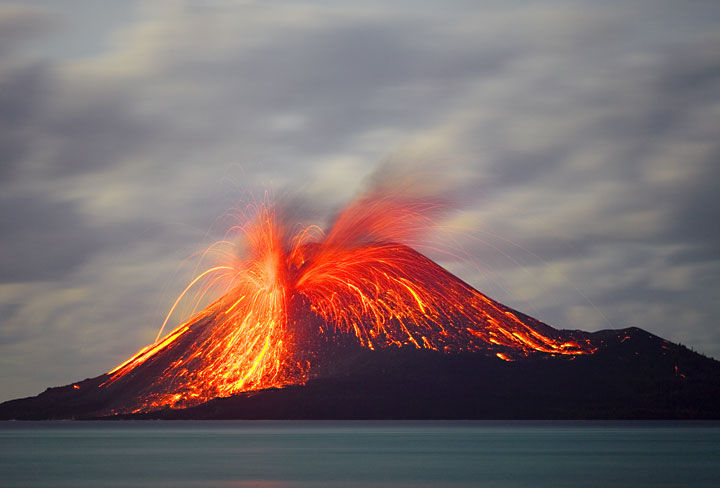
A new land formation has emerged in the waters around Indonesia’s Anak Krakatau volcano following recent volcanic activity, drawing attention to the country’s constantly changing volcanic landscape. Located in the Sunda Strait between Java and Sumatra, Anak Krakatau is one of Indonesia’s most closely watched active volcanoes. The volcano sits in the caldera left behind by the catastrophic 1883 eruption of Krakatau and has continued to reshape the surrounding area through eruptions, lava flows and volcanic deposits.
A New Island Emerges
The appearance of new land near an active volcano is a striking reminder that Indonesia’s geography is still being shaped by powerful natural forces. Volcanic eruptions can deposit lava, ash and other materials into the sea, potentially creating or extending land around an island volcano. The newly observed formation has attracted interest because of its connection to Anak Krakatau’s ongoing volcanic activity. However, newly formed volcanic land can be unstable and may change significantly as erosion, waves, additional eruptions and underwater volcanic activity continue. Rather than immediately considering the formation a permanent island, scientists typically monitor such areas over time to determine whether the new land remains above sea level and becomes stable.
Why Anak Krakatau Continues to Change
Anak Krakatau emerged from the sea decades after the 1883 Krakatau eruption. Since then, repeated eruptions have gradually changed its shape and surrounding coastline. Volcanoes located in the ocean can produce particularly dramatic changes. When lava cools and accumulates, it can build new surfaces. Explosive eruptions can also scatter volcanic material across the surrounding sea. These processes mean that an Indonesia Island can sometimes appear, expand, collapse or be reshaped within a relatively short period compared with ordinary geological processes.
Indonesia's Dynamic Volcanic Landscape
Indonesia is part of the Pacific Ring of Fire, one of the world's most volcanically and seismically active regions. The country is home to numerous active volcanoes because several tectonic plates meet beneath and around the Indonesian archipelago.
For communities and authorities, volcanic activity requires continuous monitoring. New land formations may be scientifically fascinating, but they can also indicate continuing geological activity and should not automatically be treated as safe destinations for tourism. The waters surrounding Anak Krakatau are particularly important to monitor because the volcano has previously produced major changes to the surrounding landscape.
A Reminder of Nature's Power
The emergence of new volcanic land near Anak Krakatau offers a fascinating example of how quickly Earth's surface can change. While maps and coastlines often appear permanent, volcanic regions demonstrate that geography is constantly evolving. For Indonesia, where thousands of islands stretch across a vast maritime territory, volcanic activity is an important part of the country's geological story.
Scientists will continue to observe the new formation to determine how it develops and whether it remains stable. For now, the event provides another remarkable chapter in the continuing story of Anak Krakatau and the ever-changing Indonesian archipelago.

Comments