
.png)
GM New UI Brings CarPlay Back to Its Most Important Trucks
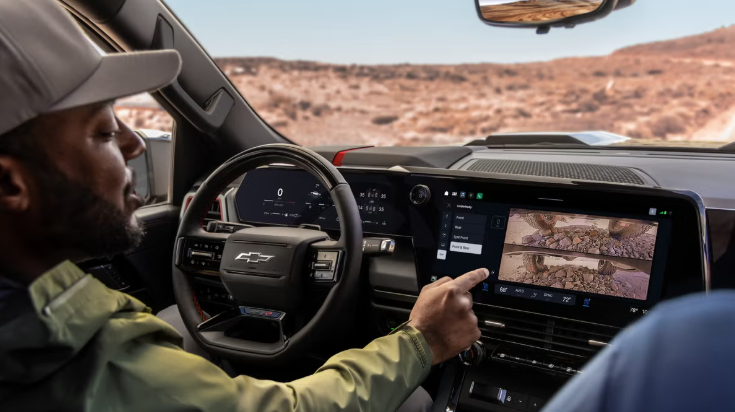
General Motors is giving its bestselling pickup trucks a major digital makeover. The 2027 Chevrolet Silverado 1500 and GMC Sierra 1500 will debut a new vehicle user interface designed to make the cabin experience simpler, more useful and easier to navigate—while also bringing Apple CarPlay and Android Auto into the experience. The update represents a significant change in GM's approach to in-car software. Rather than replacing smartphone mirroring with an entirely GM-controlled experience, the new system combines the automaker's native software with familiar phone-based platforms.
A New Digital Experience for GM Trucks
GM says the new interface was designed around three principles: simplicity, speed and predictability. The system uses high-contrast graphics, redesigned layouts and different display modes depending on what the driver is doing. The digital instrument cluster can switch between several views, including standard driving information, towing, off-road driving and Super Cruise. A simplified display can also show only the vehicle's speed, providing a less distracting view for situations such as nighttime driving.
The center infotainment display also gets a redesigned home screen. Instead of forcing drivers to move between separate screens, the new split-view layout can show a large interactive map alongside information such as trailering data, fuel economy or media. GM says commonly used controls will remain easily accessible, while physical controls for functions such as climate settings continue to be available.
Apple CarPlay and Android Auto Return
One of the biggest changes is support for Apple CarPlay and Android Auto. GM previously moved away from smartphone-mirroring systems in several newer electric vehicles, choosing instead to focus on its own integrated software experience. The new truck interface takes a different approach.
Apple CarPlay and Android Auto can now appear in a large card or window alongside GM's native applications. This allows drivers to use smartphone navigation, music and communication features while still accessing truck-specific functions such as towing information and vehicle status. GM says it worked to integrate the phone platforms more deeply into the overall interface rather than treating them as completely separate experiences.
Designed Around Truck Owners
The new interface isn't just about appearance. GM is emphasizing functions that are particularly relevant to pickup owners. Trailering receives dedicated digital features, while the system can provide different information depending on whether the truck is towing, driving off-road or using Super Cruise. GM also says drivers can perform trailer light checks through a connected mobile app, allowing them to test trailer lights without repeatedly walking between the truck and trailer. The Super Cruise display also receives a 3D visualization that represents surrounding traffic, lane markings and other road objects when the available driver-assistance system is active.
Passenger Entertainment Gets Its Own Screen
Higher-equipped versions of the Silverado and Sierra will also offer a front passenger display. The passenger screen can provide access to entertainment and streaming services while the vehicle is moving. GM says polarized screen technology prevents the driver from seeing the passenger's content. Supported services include apps such as YouTube, Hulu, Disney+, Spotify, Amazon Music, SiriusXM and others. The passenger can also connect Bluetooth headphones, allowing them to consume content without necessarily playing it through the truck's speakers.
Built for Over-the-Air Updates
GM is also treating the new interface as a software platform rather than a fixed system. The company says the architecture is designed to receive over-the-air updates that can introduce new features, refine interactions and improve performance throughout the vehicle's ownership period. The same underlying platform is also designed to eventually support GM vehicles powered by gasoline, diesel and electricity.
For GM, introducing the system on the Silverado and Sierra is particularly significant because these are among its highest-volume vehicles. The company says launching the interface on its light-duty pickups will allow it to bring the new experience to a large number of customers before expanding it more broadly across its lineup.
What This Means for GM's Future
The 2027 Silverado and Sierra show GM taking a more integrated approach to vehicle software. Instead of making drivers choose between the truck's native system and their smartphone ecosystem, the new interface is designed to let both operate together.
The inclusion of Apple CarPlay and Android Auto is particularly notable given GM's previous decision to remove these platforms from some newer EVs. Whether the truck strategy eventually leads to broader changes across GM's lineup remains unclear, but the new system demonstrates that the automaker is continuing to evolve its software strategy based on customer feedback. For drivers, the result will be a truck cabin that combines traditional physical controls with larger digital displays, truck-specific software, smartphone integration and over-the-air updates.


Comments